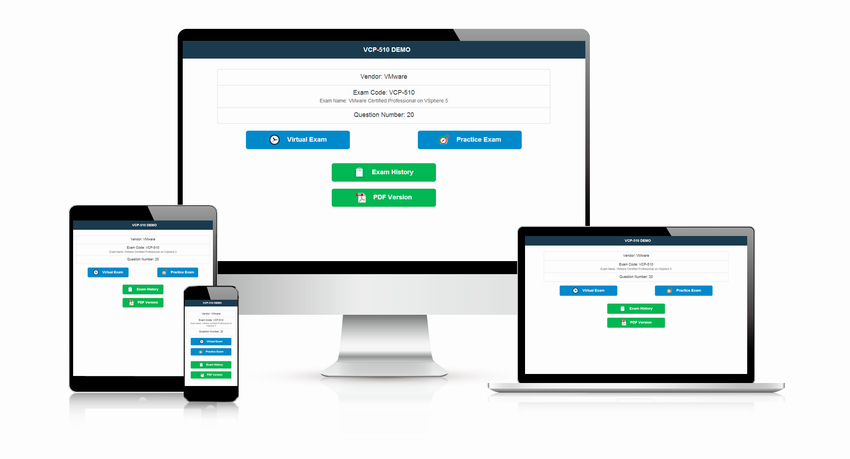
Free Demo


Online test engine version
Online version enjoys most popularity among IT workers. It can bring you to the atmosphere of 70-528 valid test and can support any electronic equipment, such as: Windows/Mac/Android/iOS operating systems, which mean that you can practice your 70-528 (TS: Microsoft .NET Framework 2.0 - Web-based Client Development) exam dumps anytime without limitation. You can make most of your spare time to review your 70-528 valid vce when you are waiting the bus or your friends. Besides, it doesn't limit the number of installed computers or other equipment.
About our Microsoft 70-528 exam pdf
Our website offers the most reliable and accurate 70-528 exam dumps for you. All of our 70-528 exam pdf was written and approved by our certified trainers and IT experts, which make sure the accuracy and high pass rate of 70-528 valid vce. Besides, our colleagues check the updating of 70-528 exam pdf everyday to ensure candidates pass the 70-528 (TS: Microsoft .NET Framework 2.0 - Web-based Client Development) valid test smoothly. Our study materials also contain the 70-528 practice exam for you to fit the atmosphere of formal test, which enable you to improve your ability with minimum time spent on 70-528 valid exam and maximum knowledge gained.

High pass rate
According to our customer's feedback, our 70-528 exam pdf have 85% similarity to the real questions of 70-528 valid exam. The high accuracy and profession of 70-528 valid vce ensure everyone pass the exam smoothly. So if you prepare Microsoft 70-528 valid test carefully and remember questions and answers of our 70-528 exam dumps, you will get a high score in the actual test.
No Help, Full Refund
We adhere to the concept of No Help, Full Refund, which means we will full refund you if you lose exam with our Microsoft 70-528 exam pdf. Also you can choose to wait the updating or free change to other Microsoft dumps if you have other test.
Our website is a professional certification dumps provider that offer candidates Microsoft 70-528 valid vce and 70-528 exam pdf for achieving success in an effective way in the 70-528 valid exam. We have a team of rich-experienced certified trainers who did many research in the 70-528 valid test, they checked the updating everyday to make sure that our candidates get the latest Microsoft 70-528 exam dumps and pass the 70-528 valid exam with high rate. Our website is the best online training tools to find your 70-528 valid vce and to pass your test smoothly. Our concept is always to provide best quality practice products with best customer service. Choosing ValidExam, choosing success.
One-year free update
If you bought Microsoft 70-528 (TS: Microsoft .NET Framework 2.0 - Web-based Client Development) exam pdf from our website, you will be allowed to free update your exam dumps one-year. If there is latest version released, we will send to your email immediately. So you don't need to check the updating of 70-528 exam dumps every day, you just need to check your email.
24/7 customer assisting
We offer 24/7 customer assisting to support you in case you may encounter some problems, such as downloading or purchasing. If you have any questions please feel free to contact us.
Microsoft 70-528 Exam Syllabus Topics:
| Section | Weight | Objectives |
|---|---|---|
| Configuring and Securing a Web Application | 18% | - Applying security best practices - Securing view state and sensitive data - Implementing authentication and authorization - Configuring membership and role management |
| Consuming and Manipulating Data | 22% | - Displaying and binding data to controls - Using data source controls - Connecting to databases using ADO.NET - Working with XML data |
| Implementing Web Forms and Controls | 22% | - Implementing master pages and themes - Creating custom server controls - Creating and configuring user controls - Using standard and validation controls |
| Implementing Client-Side Functionality and Navigation | 10% | - Using navigation controls and site maps - Using Web Parts and personalization - Implementing client-side scripts and callbacks |
| Developing and Configuring a Web Application | 20% | - Configuring application settings - Creating Web applications and pages - Deploying and maintaining Web applications - Managing state and application lifecycle |
| Monitoring and Debugging Web Applications | 8% | - Configuring error handling and logging - Monitoring performance and health - Tracing and debugging applications |
Microsoft TS: Microsoft .NET Framework 2.0 - Web-based Client Development Sample Questions:
Question 1
You are designing a Web application by using Microsoft ASP.NET .
You add a master page and content pages to the application. The master page contains a Label control named lblTitle.
You need to reference lblTitle from the code within the content pages.
Which code segment should you use?
A. Label lblTitle; lblTitle = (Label)Page.Form.FindControl("lblTitle");
B. Label lblTitle; lblTitle = (Label)Master.LoadControl("lblTitle");
C. Label lblTitle; lblTitle = (Label)Master.FindControl("lblTitle");
D. Label lblTitle; lblTitle = (Label)Master.ParseControl("lblTitle");
Question 2
You write a Web application. This application must support multiple languages.
You store the localized strings in the application as resources.
You want these resources to be accessed according to a user's language preference.
You create the following resource files in the App_GlobalResources folder of your application.
myStrings.resx myStrings.en-CA.resx myString.en-US.resx myStrings.fr-CA.resx myStrings.es-MX.resx
Each resource file stores a localized version of the following strings: Name, E-mail, Address, and Phone.
You create a Web Form that contains one label for each of these strings.
You need to ensure that the correct localized version of each string is displayed in each label, according to a user's language preference.
What should you do?
A. Set the directive for each page in your site as follows: <%@ Page UICulture="Auto" %>
B. Add the following code segment to the page's load event. lblName.Text = "{myStrings}Name" lblAddress.Text = "{myStrings}Address" lblEmail.Text = "{myStrings}Email" lblPhone.Text = "{myStrings}Phone"
C. Add the following code segment to the page's load event. lblName.Text = Resources.myStrings.Name lblAddress.Text = Resources.myStrings.Address lblEmail.Text = Resources.myStrings.Email lblPhone.Text = Resources.myStrings.Phone
D. Add the following configuration section to the Web.config file. <globalization culture="Auto" />
Question 3
You are creating a composite control for capturing user address information in a Web application. You
define a number of properties that the user can set at design time.
You need to group these properties in the Properties dialog box.
In addition, you need to ensure that when users click on a particular property, they receive a short
explanation of that property.
The properties are shown in the exhibit. (Click the Exhibit button.)
Which two actions should you perform? (Each correct answer presents part of the solution. Choose two.)
A. Attach the DefaultProperty attribute class to each property in the group. Set each value to a description of the given property.
B. Attach the Description attribute class to each property in the group. Set each value to a description of the given property.
C. Attach the Category attribute class to each property in the group. Set its value to UserAddress. Mark the property as public.
D. Attach the Browsable attribute class to each property in the group. Set its value to True. Mark the property as private.
E. Attach the Category attribute class to the control's class definition. Set its value to UserAddress. Mark the class as public.
Question 4
You create a Web application for your company's intranet. You want to enable users to customize their
versions of the intranet home page.
You create sections of content as Web Parts.
You need to ensure that users can customize content at any time.
Which two code segments should you use? (Each correct answer presents part of the solution. Choose
two.)
A. <asp:ConnectionsZone ID="ConnectionsZone1" Runat="server"> <ConnectVerb Enabled="true" /> </asp:ConnectionsZone>
B. <asp:CatalogZone ID="CatalogZone1" Runat="server"> <ZoneTemplate> <asp:PageCatalogPart Runat="server" ID="PageCatalogPart1" /> </ZoneTemplate> </asp:CatalogZone>
C. <asp:ProxyWebPartManager ID="ProxyWebPartmanager1" Runat="server" />
D. <asp:WebPartZone ID="WebPartZone1" Runat="server"> <ZoneTemplate> ... </ZoneTemplate> </asp:WebPartZone>
Question 5
You are developing a Web application.
The home page of the application is named Default.aspx. The home page is regularly updated.
You need to ensure that you can precompile and deploy the application. You also need to ensure that
Default.aspx can be modified without recompiling the application.
What should you do?
A. Use the Copy Web Site tool to copy Default.aspx to the Web server.
B. Use the Publish Web Site tool and select the Use fixed naming and single page assemblies option.
C. Use the Publish Web Site tool and select the Allow this precompiled site to be updatable option.
D. Use the Copy Web Site tool to copy the App_Code folder to the Web server.
Solutions:
| Question 1 Answer: C | Question 2 Answer: C | Question 3 Answer: B,C | Question 4 Answer: B,D | Question 5 Answer: C |