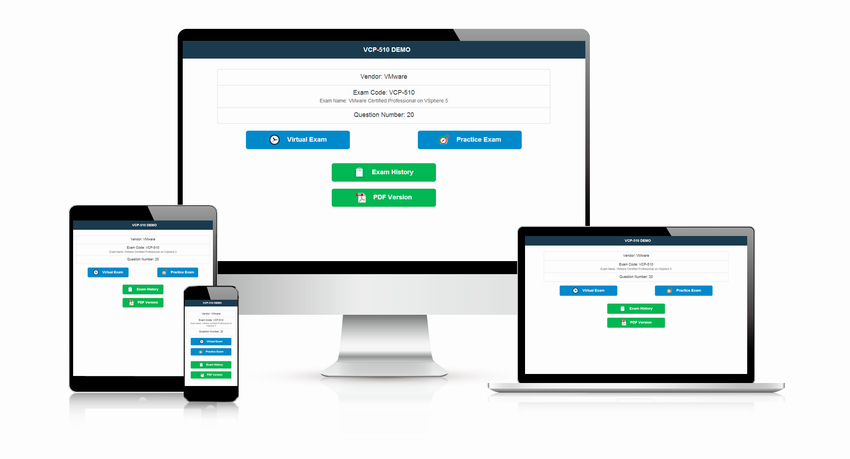
Free Demo


IT workers vote with their installs: the Oracle Cloud Infrastructure 2022 Architect Professional online version at ValidExam runs on Windows, Mac, Android, and iOS — 167 practice questions for the 1z0-997-22 exam, unlimited devices.
Oracle 1z0-997-22 Exam Overview:
| Certification Vendor: | Oracle |
|---|---|
| Exam Name: | Oracle Cloud Infrastructure 2022 Architect Professional |
| Exam Number: | 1Z0-997-22 |
| Related Certifications: | Oracle Cloud Infrastructure 2022 Certified Architect Associate |
| Passing Score: | 65% |
| Real Exam Qty: | 50 |
| Exam Duration: | 120 minutes |
| Exam Format: | Multiple Choice |
| Exam Price: | USD $321 |
| Available Languages: | English, Japanese |
| Certificate Validity Period: | 2 years |
| Recommended Training: | Oracle Cloud Infrastructure 2022 Architect Professional Training |
| Exam Registration: | Oracle University Exam Registration Pearson VUE |
| Sample Questions: |  |
| Exam Way: | Online proctored or Onsite at Pearson VUE test centers |
| Pre Condition: | Must hold Oracle Cloud Infrastructure 2022 Certified Architect Associate certification |
| Official Syllabus URL: | https://education.oracle.com/oracle-cloud-infrastructure-2022-architect-professional/pexam_1Z0-997-22 |
Oracle 1z0-997-22 Exam Syllabus Topics:
| Section | Objectives |
|---|---|
| Topic 1: Security and Compliance | - Design solutions to meet compliance requirements - Design, implement and operate solutions for security and governance |
| Topic 2: Implementation and Operations | - Implement solutions to meet business and technical requirements - Operate and troubleshoot solutions on OCI - Evaluate multi-cloud solution architectures |
| Topic 3: Database and Cloud Services | - Implement and operate OCI services - Design, implement and operate databases in OCI - Implement and troubleshoot database migrations |
| Topic 4: OCI Architecture and Design | - Design scalable and elastic solutions for high availability and disaster recovery - Create architecture patterns including N-tier, microservices, and serverless - Design strategy for migrating on-premises workloads to OCI - Plan and design solutions in Oracle Cloud Infrastructure |
| Topic 5: Network and Infrastructure Management | - Design and implement hybrid network architectures - Manage infrastructure using IaC, CLI, APIs and SDKs |
Oracle Cloud Infrastructure 2022 Architect Professional Exam FAQ — Effective Answers
Delivery is instant: payment triggers an automatic email within a minute — unlimited installations, and 24/7 customer assisting for any downloading or purchasing issue if nothing arrives within 2 hours. If you fail the corresponding 1z0-997-22 exam within 60 days of purchase, choose your remedy: a full refund (scanned enrollment slip plus the official Score Report PDF within 2 days of the exam; processed within 7 days), waiting for the next updated version free, or a free change to two other equal-value dumps. Excluded: exams within 3 days of purchase, candidate names that don't match the payer, and free or expired products.
120 minutes for 50 questions. Fit the atmosphere in advance: timed sessions in the ValidExam online engine make the formal pace feel practiced, not pressured.
Use the vendor's official registration channels:
The Oracle Cloud Infrastructure 2022 Architect Professional is delivered Online proctored or Onsite at Pearson VUE test centers — select whichever arrangement suits you when booking.
The Oracle Cloud Infrastructure 2022 Architect Professional blueprint spans 5 domains — including OCI Architecture and Design, Database and Cloud Services, Network and Infrastructure Management. Let the weightings direct your spare-time review; the full outline above lists every subtopic.
Yes — download the free Oracle Cloud Infrastructure 2022 Architect Professional demo and evaluate the material before paying. Purchases include 365 days of free updates, each new version emailed immediately upon release; renew afterward at 50% off.
Must hold Oracle Cloud Infrastructure 2022 Certified Architect Associate certification Eligibility rules change periodically, so confirm the current requirements on the official page (official 1z0-997-22 exam page) before registering.
Yes:
Courses give you the theory; the 167 practice questions for the Oracle Cloud Infrastructure 2022 Architect Professional give you the rehearsal — every answer expert-verified.
The Oracle Cloud Infrastructure 2022 Architect Professional is Oracle's certification exam for Oracle Cloud Infrastructure 2022 Certified Architect Professional, at the Professional level. It validates job-ready skills, and passing it marks you as a verified professional. Related credentials include Oracle Cloud Infrastructure 2022 Certified Architect Associate.
USD $321 per attempt, 65% to pass. A retake costs the full fee again — effective preparation with the 167 practice questions for the 1z0-997-22 exam is the economical path.
Oracle Cloud Infrastructure 2022 Architect Professional Sample Questions:
A company runs a public-facing application that uses a Java-based web service via a RESTful API in their on-premises data center. Use of the API is expected to double with a new product launch. The business wants to migrate their application to Oracle Cloud Infrastructure (OCI) to meet the scale and reliability requirements. In order to achieve this, they will divert only 40% of the traffic to the new Apache Tomcat web servers running on OCI and serve the remaining 60% traffic through their on-premises infrastructure. Once the migration is complete and application works fine, they will divert all traffic to OCI. How can these requirements be met with the LEAST amount of effort?
- A. Use VPN connectivity between on premises Infrastructure and OCI and create routing tables to distribute the traffic between them.
- B. Use an OCI load Balancer and distribute the traffic between OCI and on premises infrastructure.
- C. Use OCI Traffic management service with failover steering policy and distribute the traffic between OCI and on premises infrastructure.
- D. Use OCI Traffic management service with Load Balancing steering policy and distribute the traffic between OCI and on premises infrastructure.
Correct Answer: D 🗳️
You are working on the migration of the web application infrastructure of your company from on-premises to Oracle Cloud Infrastructure. You need to ensure that the DNS cache entries of external clients will not direct them to the on-premises infrastructure after switching to the new infrastructure.
Which of the following options will minimize this problem?
- A. Reduce the TTL of the DNS records after the switch.
- B. Increase the TTL of the DNS records before the switch.
- C. Increase the TTL of the DNS records after the switch.
- D. DNS changes propagate fast enough that it is not necessary to take any action.
- E. Reduce the TTL of the DNS records before the switch.
Correct Answer: E 🗳️
A large London based eCommerce company is running Oracle DB System Virtual RAC database on Oracle Cloud Infrastructure (OCI) for their eCommerce application activity. They are launching a new product soon, which is expected to sell in large quantities all over the world.
The application architecture should have minimal cost, no data loss, no performance impacts during the database backup windows and should have minimal downtime.
- A. Turn off automatic backups from the eCommerce database, implement Oracle Active Data Guard with the standby database deployed on another availability domain, and take backups from the standby database.
- B. Launch a new VM RAC database in another availability domain, launch a compute instance, deploy Oracle GoldenGate on it and then configure it to replicate the data from the eCommerce Database over to the new RAC database using GoldenGate. Take backups from the new VM RAC database.
- C. Turn off automated backups from the eCommerce database, implement Oracle Data Guard with the Standby database deployed on another availability domain, take backups from the standby database.
- D. Launch a new VM RAC database in another availability domain, launch a compute instance, deploy Oracle GoldenGate on it and then configure bi-directional replication from the eCommerce Database over to the new VM RAC database using GoldenGate. Take backups from the new VM RAC database.
Correct Answer: D 🗳️
Explanation: Only visible for ValidExam members. You can sign-up / login (it's free).
You are trying to troubleshoot the configuration of your Oracle Cloud Infrastructure (OCI) Load Balancing service. You have a backend HTTP service for which you have created a backend set in the load balancer. You have configured health checks for the backend set. Although the health checks appear good, customers sometimes experience transaction failures.
Which of the following options will definitely lead to this problem?
- A. You are NOT using regional subnets in your Virtual Cloud Network. With Availability Domain (AD) specific subnet. the compute instances of the backend service running in the subnet have issues when the AD is down.
- B. You are using iSCI for block volume attachment to the compute instances in your backed HTTP service. TCP/IP configuration of your block volume attachment is not configured correctly, leading to issues in your backend service.
- C. You are using OCI Domain Name System. You have misconfigured the 'A' record with the wrong IP address leading to requests not getting routed correctly.
- D. You are running a TCP-level health check against your HTTP service. The TCP handshake can succeed and indicate that the service is up even when the HTTP service has issues.
Correct Answer: D 🗳️
You are working for a Travel company and your travel portal application is a collection of microservices that run on Oracle Cloud Infrastructure Container Engine for Kubernetes. As per the recent security overview, you have noticed that Oracle has published a newer image of the Operating System used by the worker nodes. You want to make sure that your application doesn't face any downtime but at the same time the worker nodes gets upgraded to the latest version of the Operating System.
What should you do to get this upgrade done without application downtime? (Choose the best answer.)
- A. 1. Create a new node pool using the latest available Operating System image. 2. Run kubectl cordon <node name> against all the worker nodes in the old pool to stop any new application pods to get scheduled 3. Run kubectl drain <node name> """"delete""local""data """"force """"ignore""daemonsets to evict any Pods that are running 4. Delete the old node pool
- B. 1. Run kubectl cordon <node name> against all the worker nodes in the old pool to stop any new application pods to get scheduled 2. Run kubectl drain <node name> """"delete""local""data """"force """"ignore""daemonsets to evict any Pods that are running 3. Download the patches for the new Operating System image 4. Patch the worker nodes to the latest Operating System image
- C. 1. Shutdown the worker nodes 2. Create a new node pool 3. Manually schedule the pods on the newly built node pool
- D. 1. Create a new node pool using the latest available Operating System image 2. Run kubectl taint nodes """"all node""role.kubernetes.io/master"" 3. Delete the old node pool
Correct Answer: A 🗳️
Explanation: Only visible for ValidExam members. You can sign-up / login (it's free).